
GPS technology has provided a way to help drivers (both novice and experienced) get around. Mobile navigation apps provide drivers with options to locate where they want to go, find ways to avoid heavy traffic areas and provide alternative routes. Unfortunately, GPS is not always accurate and easy to use. There are many times when drivers make wrong turns, have old maps, change directions abruptly, or receive confusing directions. These types of experiences may cause drivers to experience high levels of stress, particularly on busy Indian roads.
Road safety includes knowing how to deal with the issues of being given misleading instructions by your GPS system while driving. With knowledge of safe navigation methods, route planning strategies, and defensive driving techniques, young drivers will have a greater ability to remain calm and focused and arrive at their destination with less worry.
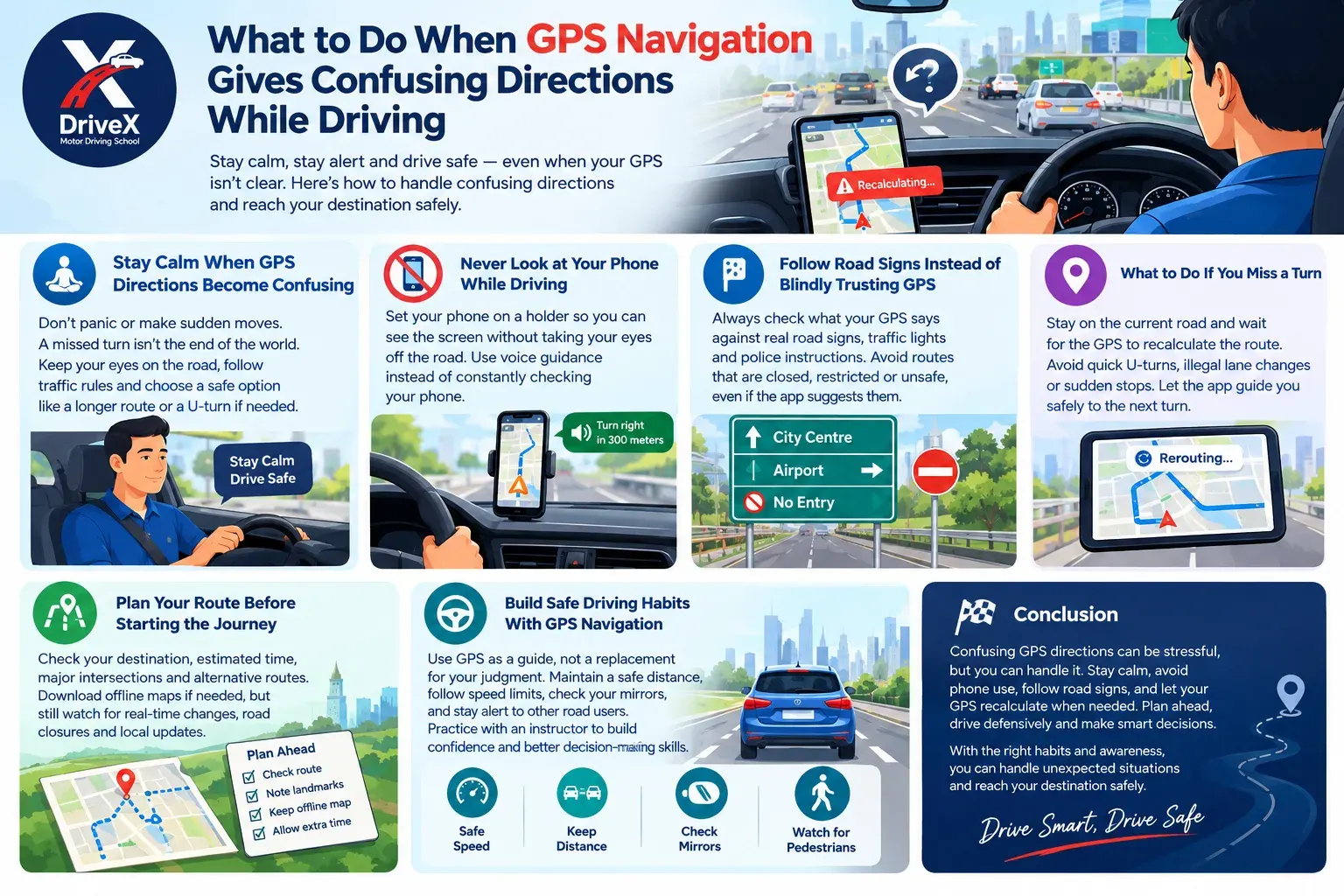
Stay Calm When GPS Directions Become Confusing
When your GPS navigation system provides unclear directions, try not to panic and make sudden driving decisions. Many times, navigation systems will provide you with a turn direction at the last minute; have you change lanes suddenly; or provide a route that does not match the actual road signs.
Do not react to the situation immediately; rather, continue driving safely and keep your eyes on the road. A missed turn will not be an issue as long as you can remain composed and adhere to all traffic laws. Taking a longer route around the block or making a u-turn is much safer than attempting to make an emergency turn, crossing over a solid white line, or stopping suddenly while other drivers are in motion.
Never Look at Your Phone While Driving
One of the most critical safety guidelines for using GPS navigation devices while driving is to refrain from touching your mobile device during that time. A prolonged gaze on the navigation screen can cause distractions from other motorists (motorcycles), pedestrians, stop lights, and motorists who are stopped in front of you.
The first thing to do is to find a place on the car’s dashboard or windshield that will hold your phone firmly enough for you to see it while driving, but at the same time allow you to see the road clearly. After finding an appropriate spot, enter the location of your destination into your phone’s GPS application. Then look over the suggested routes and select the one that seems best suited for you. Lastly, turn on the voice guidance feature of your GPS application. This way you can hear directions rather than having to constantly look down at your phone.
Follow Road Signs Instead of Blindly Trusting GPS
Occasionally, GPS navigation apps will suggest routes that are not appropriate for your travel needs due to inaccuracies within the app’s map database, temporary road closures, construction, or bad location data. Additionally, the route the app recommends could take you down a restricted road, onto a narrow street, or into a driveway that is too small for your vehicle.
Always check what the GPS says against real-life signs, traffic lights, barricades and advice given by authorized traffic personnel. Do not use the GPS navigation app when a road has been shut off to you or you are not allowed to enter.
Even though a GPS app may give you directions to go somewhere else than where the actual roads are, in order to drive safely in Indian cities you should be paying attention to the way the roads are laid out, which can change due to construction, diversions, and other local traffic regulations.
What to Do If You Miss a Turn
When you are in an unfamiliar area, missing turns is very common. It is best to remain on the same road as long as possible before making a legal and safe maneuver.
The majority of GPS navigation applications will update their routes once you make a wrong turn. Please wait for the updated route directions before attempting to correct your mistake by making a quick U-turn, changing lanes quickly, or executing an illegal U-turn.
If your GPS constantly routes you to a complex intersection, then you should pull over in a safe area and check the map. Reviewing where to turn, what is around you, and the structure of the roads prior to moving forward will help you avoid getting lost again.
Plan Your Route Before Starting the Journey
Good route planning will help alleviate stress and build your driving confidence. Prior to your departure, identify your destination, determine the estimated travel time, note any major intersections along the way and explore potential alternative routes. Additionally, when traveling in unfamiliar territory, take the opportunity to study the final approach to your destination. This will enable you to recognize either a specific road or entrance that leads to your destination.
Downloading maps to use offline can also be useful if you’re experiencing a weak connection to the internet on your phone. However, since the offline version of a map does not update in real-time, it won’t display current traffic, temporary road closures, or any other changes made to the roads recently. Therefore, make sure to watch out for road signs and pay attention to your surroundings.
The benefits of planning ahead can be seen especially well by new drivers as they are learning to develop skills in making timely judgments about what’s happening on the road, and therefore make better choices while driving.
Build Safe Driving Habits With GPS Navigation
GPS navigation is intended to help you make informed choices while driving. It does not take over for you as a driver, nor does it make the final decision about how you will proceed. Always allow yourself plenty of room behind the vehicle in front of you, use a safe speed, check your mirrors prior to making a lane change, and be mindful of pedestrians and other individuals using the roadway.
At DriveX Motor Driving School, students can gain confidence while learning to drive safely and with awareness of their environment. Students will also be able to practice following routes with an instructor which will enable them to learn how to manage navigating the route while controlling the vehicle safely.
Conclusion
If you find yourself confused by the directions provided by your GPS navigation system, it does not mean that you are going to get into a dangerous driving situation. It is important to stay calm, refrain from making sudden movements, follow all of the official road signage available to you, and most importantly, do not use your cell phone while you are operating your motor vehicle. If you happen to miss a turn, simply proceed in a safe manner, and then permit your GPS navigation application to recalculate the route for you.
By utilizing GPS to plan a route, driving defensively, being aware of traffic around you, and making smart decisions about how you drive, new drivers can be more confident and secure when navigating unfamiliar streets.