
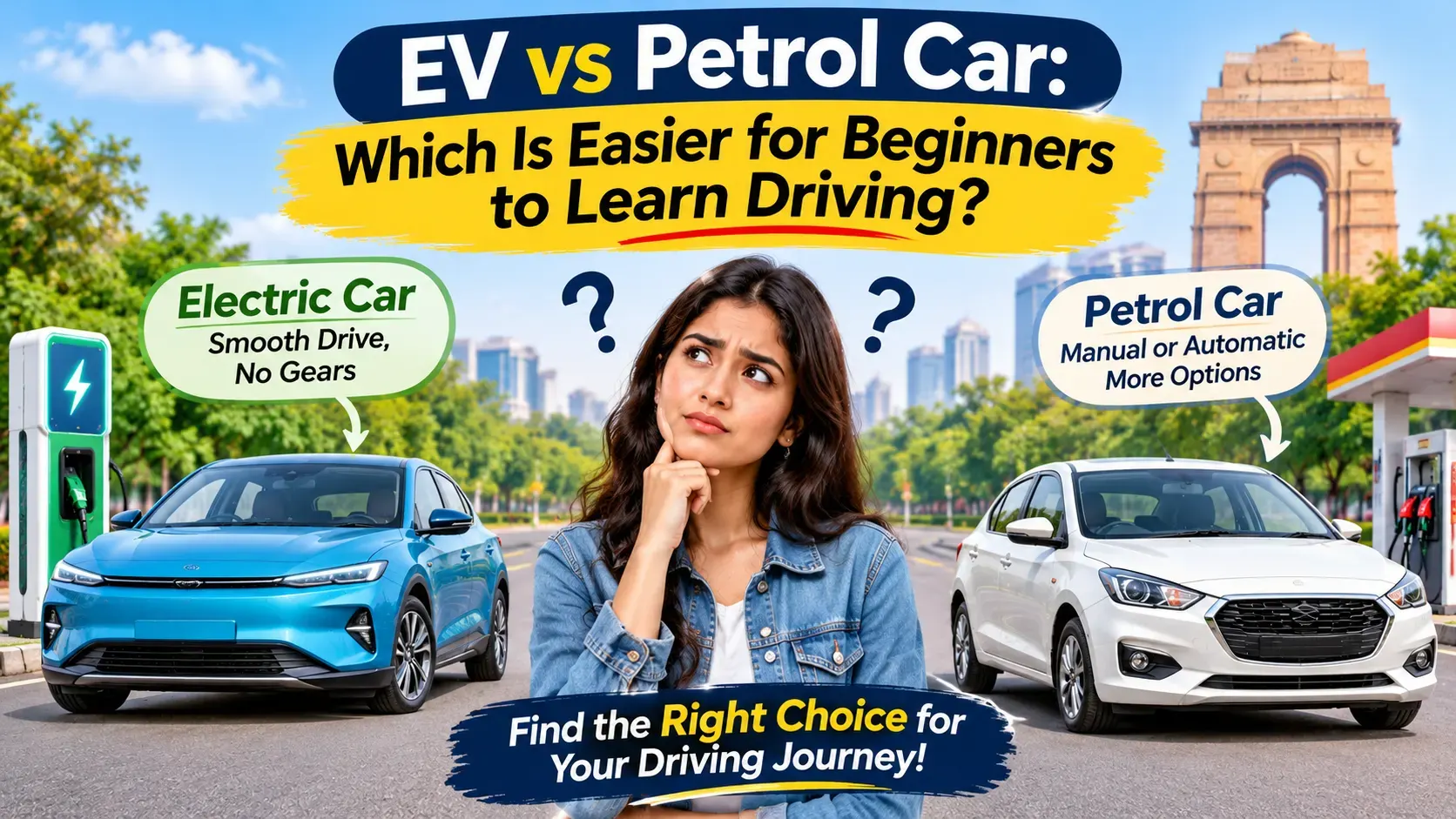
Selecting the type of car that will be used to learn to drive on can be challenging; however, selecting an electric car as opposed to a gasoline-powered car may create even greater challenges due to the increasing popularity of electric cars in India. For beginners, it may seem logical to consider if learning how to operate an electric car would be less difficult than learning how to operate a gasoline-powered car. Each type of vehicle provides a different experience while operating; however, which of these options is the most appropriate choice for someone who has no experience operating either?
If you are considering taking car driving courses in Delhi, knowing the differences between electric cars and gasoline-powered cars can assist in making a better choice. In this article we will explain how each vehicle functions, and also provide insight into which type of vehicle is most appropriate for new drivers.
Understanding the Difference Between EV and Petrol Cars
The two types of cars differ primarily in how they generate power. One type of car (electric) generates power through the use of an electric motor which is powered by a large rechargeable battery. The other type of car (gasoline) generates power via an internal combustion engine which is fueled by gasoline. While both vehicles were created to offer comfortable transportation options to consumers; however, there is some difference in terms of control layout and driving experience.
The vast majority of electric vehicles (EVs) have an automatic transmission, and do not feature a standard manual clutch or allow for the manual shifting of gears. In contrast, gasoline-powered vehicles may be purchased with either an automatic or a manual transmission. This fundamental difference in transmission types can have significant implications for the ease with which beginners develop basic driving techniques.
Is an Electric Car Easier to Drive for Beginners?
Electric vehicles (EVs) are typically simpler for novice drivers to control, especially those who wish to master the art of operating a manual transmission vehicle. Because the majority of EVs do not require the use of a clutch, nor do they necessitate the manual shifting of gears, novice drivers can concentrate their efforts on steering, slowing down, accelerating, and being aware of their surroundings.
Electric cars offer rapid, smooth acceleration, and they are quiet, making the first time you drive one feel easier. New drivers should be aware of how fast an electric car responds to pressing the accelerator pedal.
Another key aspect of electric cars is their ability to use regenerative braking to capture lost energy as the car begins to slow. As a result, depending upon how the car is set up, releasing the gas pedal may cause a noticeable reduction in speed. Beginning drivers will require additional time to get used to how the car acts under these conditions.
Is Learning to Drive a Petrol Car Difficult?
It is not difficult to learn how to operate a petrol-powered vehicle, however, your experience learning will vary depending on if you opt for an automatic or manual transmission.
A manual petrol-driven vehicle will require its learner driver to be able to operate a clutch, shift gears and use both the accelerator pedal and the clutch pedal together. In the early stages, a new driver might have trouble operating all three at once; however, with practice and experience, they should become more adept at operating them together.
An automatic petrol vehicle is normally less complex to drive as there are no gears that need to be manually shifted and there isn’t a clutch to use. Therefore, this type of vehicle can be seen as a good option for people learning to drive who wish to focus on road position, how they turn the wheel and what is happening around them.
EV vs Petrol Car: Which Is Better for Driving in Delhi?
Delhi’s roads vary greatly in their driving environment. From narrow streets with markets and large intersections to wide roads and expressways. Those who are just beginning to learn how to drive in regions like Jasola Vihar, Sarita Vihar, Okhla, Kalindi Kunj and Govindpuri will have to gain confidence to adapt to changing driving scenarios.
Electric vehicles (EVs) have the potential to make driving in heavy traffic less stressful for drivers. EVs accelerate smoothly, and their automatic-like operation can help take the edge off the frustration that often accompanies being stuck in a jam. A gasoline-powered automatic car may be just as convenient as an EV when it comes to dealing with congested roadways; however, unlike an EV, drivers using a gasoline-powered automatic do not need to learn about EV-specific features.
If you are a beginner and would like to learn how to use a clutch and drive with manual gears, then a manual petrol car may be the best option for you. Your final decision will depend on what type of car you plan to drive most often.
Important Driving Skills Every Beginner Should Learn
Whatever type of vehicle you decide to drive (either electric or gasoline powered), there are many driving skills that will always be equally important. New drivers need to learn how to properly steer their vehicles, use the brakes correctly, back up, park, maintain lane position, and understand road signs.
Beginner drivers must also learn to understand traffic signals, safe following distances, blind spots, and what to do in the presence of pedestrians and other drivers. Learning these basic skills is particularly critical while learning to drive on the congested streets of Delhi.
While technology may simplify many of the tasks involved in operating a motor vehicle, there is no substitute for actual driving experience and the ability to make good decisions while operating a motor vehicle.
Which Car Should You Choose for Your First Driving Lessons?
An electric vehicle or an automatic gasoline powered vehicle may be a good option for you if your primary goal is to learn how to drive automatically, but with fewer things to worry about. On the other hand, if you would like to gain experience in learning how to coordinate a clutch and shift gears manually then a manual gasoline powered vehicle would be a better choice for you.
Prior to registering for a driving class, think about what you will need for driving in the future, what kind of vehicle you plan on using, and the types of hands-on training that are provided by your driving school.
Learn Safe and Confident Driving with DriveX Motor Driving School
The choice of whether to purchase an electric vehicle (EV) or gas-powered vehicle is just one of many choices that will help you become a more confident driver. There are several other factors such as receiving quality instruction and practicing consistently that can contribute to developing good driving skills.
DriveX Motor Driving School will help you to gain knowledge on the most basic aspects of driving. This will also give you confidence when it comes to being in control of the vehicle. If you want to learn how to drive a car in South Delhi or if you would like to find beginner driving classes in Jasola Vihar, then there is no doubt that by finding an appropriate training program, your learning experience will be made much easier.
Final Thoughts
So, EV versus gasoline car: Which is easier to learn how to drive? Electric vehicles usually provide easier control over the vehicle, while automatic gasoline vehicles will provide you with a comparable amount of ease. Gasoline vehicles that have manual transmissions will provide a greater challenge to learn how to operate the transmission and clutch, but will teach you how to properly control both.
In the end, the perfect vehicle to learn how to operate will be determined by what you plan on doing with it in the future, as well as providing ample opportunities for safe practice.