Driving in the rain can cause a great deal of stress for many people, especially if road markings have vanished under water or can no longer be seen clearly. The use of lane markings, turning indicators and crosswalks provide drivers with directions on which side of the street they should travel along, and at what point in time they may wish to turn. However, if those markings cannot be clearly identified, even most experienced drivers will need to be extremely cautious. For new drivers, understanding what is involved with being able to safely navigate wet roads is essential to developing the skills necessary to become a safe driver.
The driver who knows how to drive during a rainstorm can maintain composure, avoid making erratic maneuvers, and take action based upon knowledge of the situation. Through practice and awareness, the student can build confidence and effectively navigate difficult road conditions.
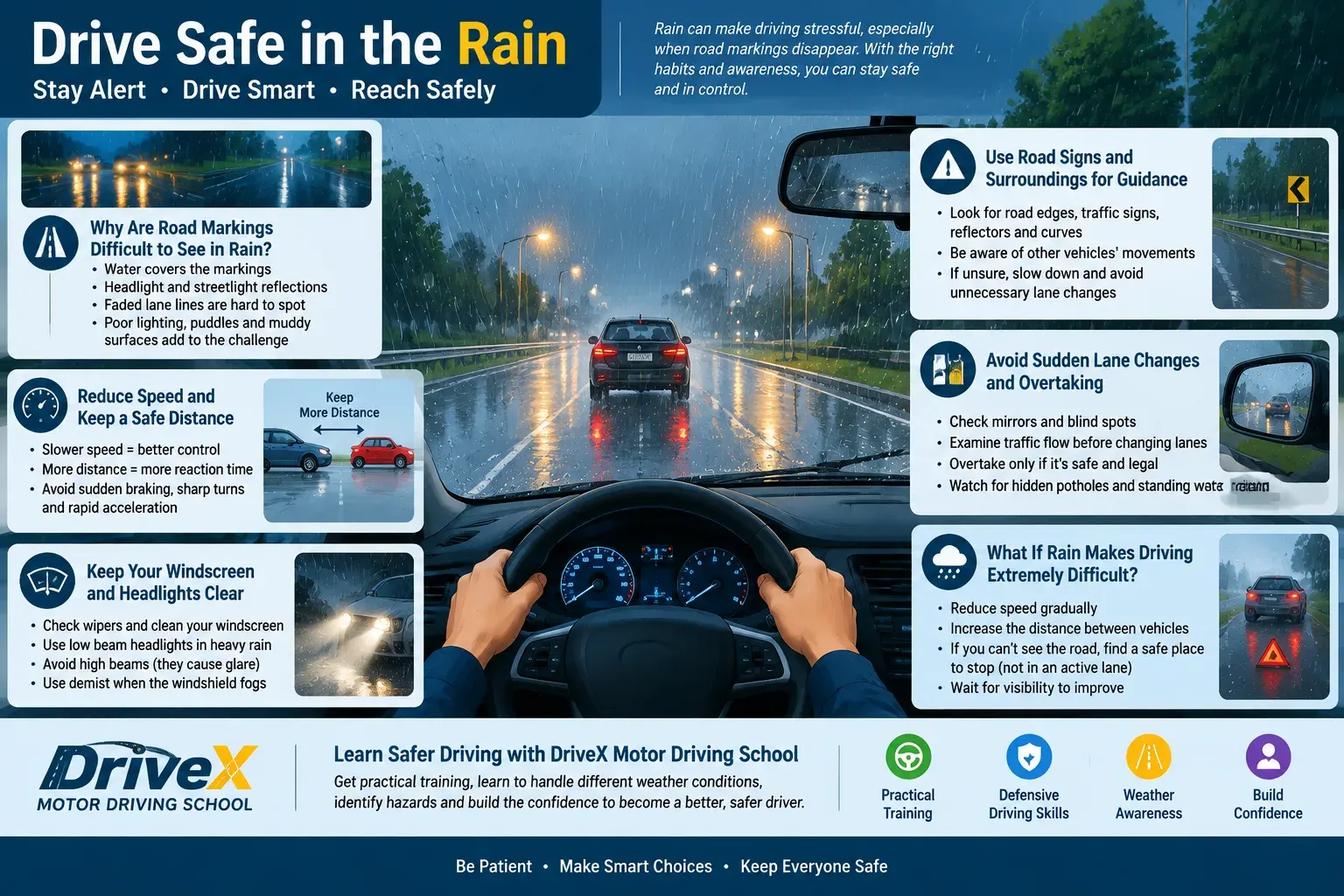
Why Are Road Markings Difficult to See in Rain?
Heavy rain creates a layer of water over road marking, making it harder for drivers to see the markings. Reflections off of the head light and street lights make it difficult to determine what is on the road. Lane lines that have faded are especially hard to identify on wet roads, particularly during the nighttime hours.
Poor street lighting, puddles, and muddy surfaces can all affect your ability to see the lane lines and pedestrian crossings. All three factors can also lead to an increased likelihood of making incorrect turns or changing lanes without warning. Identifying these risks is the first step in being able to drive more safely during a rain event.
Reduce Speed and Keep a Safe Distance
The first and perhaps most critical tip for driving on wet roads is to slow down. As rain water reduces the amount of traction provided by your tires, it can require more distance to bring your vehicle to a complete stop. Additionally, driving at high speeds provides less time to make adjustments to your driving strategy when unexpected changes in road conditions occur (e.g. road markings or other vehicles) that were not readily apparent prior to your approach.
A safe distance should be maintained between your car and the one in front of you. When visibility is reduced, a greater distance should be maintained. To help maintain control and avoid skidding on wet surfaces, it is best to avoid sudden braking, sharp turning, and/or rapid acceleration.
Use Road Signs and Surroundings for Guidance
When you can’t see the lines on the road well enough to know when your lane starts or stops, don’t guess. Instead, pay attention to the edge of the road that you can see, other traffic signs, reflectors, and the way the road curves.
You should be aware of how other vehicles are moving around you so that you can see where they are going rather than just blindly follow what they do. The same applies to the other drivers as well; they too may be unable to clearly see the markings. If you don’t know the layout of the road you’re on, then slowly reduce your speed while avoiding making any unnecessary lane changes.
Driving safely in rain is a critical skill for new drivers to develop. This includes good observation of what’s happening around you, as well as making sound decisions based upon that information.
Keep Your Windscreen and Headlights Clear
Clear view of the road will allow you to see what lies ahead of you and react quickly to possible dangers. Prior to departing, confirm that your windscreen wipers are in proper working order and your windscreen has been cleaned.
Use low beam headlights if the rain impairs visibility and as dictated by driving conditions. Do not use high beam headlights in heavy rain as the reflection of light can make it difficult for you to see. When the windshield of your vehicle begins to fog over, activate the demist feature to allow you to clear the view.
A few easy vehicle checks can significantly impact how well you drive in the rain.
Avoid Sudden Lane Changes and Overtaking
Changing lanes is more risky when road markings are difficult to see. Prior to moving into a different lane, verify that you have used your mirror(s), looked for other vehicles in your blind spot(s) and examined the current traffic flow.
Overtake only if you are sure it is safe and legal to do so. Wet roads can hide potholes and standing water, and that can create a hazardous situation when you’re trying to make a quick steering maneuver.If you maintain your pace and position on the road, you’ll have a better chance to react to unforeseen events.
What If Rain Makes Driving Extremely Difficult?
Sometimes, when it rains heavily, visibility can drop to the point where you can’t see road signs, lane markings, or vehicles nearby. Under these circumstances, continuing on your trip could prove dangerous.
Reduce your speed gradually and increase the distance between you and other vehicles. If you cannot clearly identify the road ahead of you well enough to proceed safely, look for a safe and lawful location off of the main highway to stop. Do not stop in an active lane or at a location where it will be difficult for other drivers to observe your car as they approach.
Wait until the visibility improves prior to continuing. It would be better to arrive at your destination somewhat later than to take an unnecessary risk.
Learn Safer Driving with DriveX Motor Driving School
Learning how to operate an automobile includes other aspects besides operating the steering wheel, applying the brakes and shifting gears. Also, new drivers should be aware of the importance of road signs, stay in the right lanes, have good control of their cars and use defensive driving skills to deal with different weather conditions.
DriveX Motor Driving School will allow you to learn practical driving techniques using structured training and instruction. You’ll gain an understanding of how to deal with wet road surfaces, identify potential hazards on the road and keep your vehicle under control in low-light situations. This knowledge can give beginner drivers confidence when they are faced with the many daily challenges of driving.
DriveX Motor Driving School will allow you to learn to drive or increase your level of confidence when driving. Through consistent practice and proper training, you will be able to develop into a better, more accountable driver.
Remember, if you find it hard to see the lines on the road because of rain, reduce your speed, check out what is happening around you and try to avoid any abrupt actions. It’s best to be patient and make smart choices so that you and all others who share the road will remain safe.