
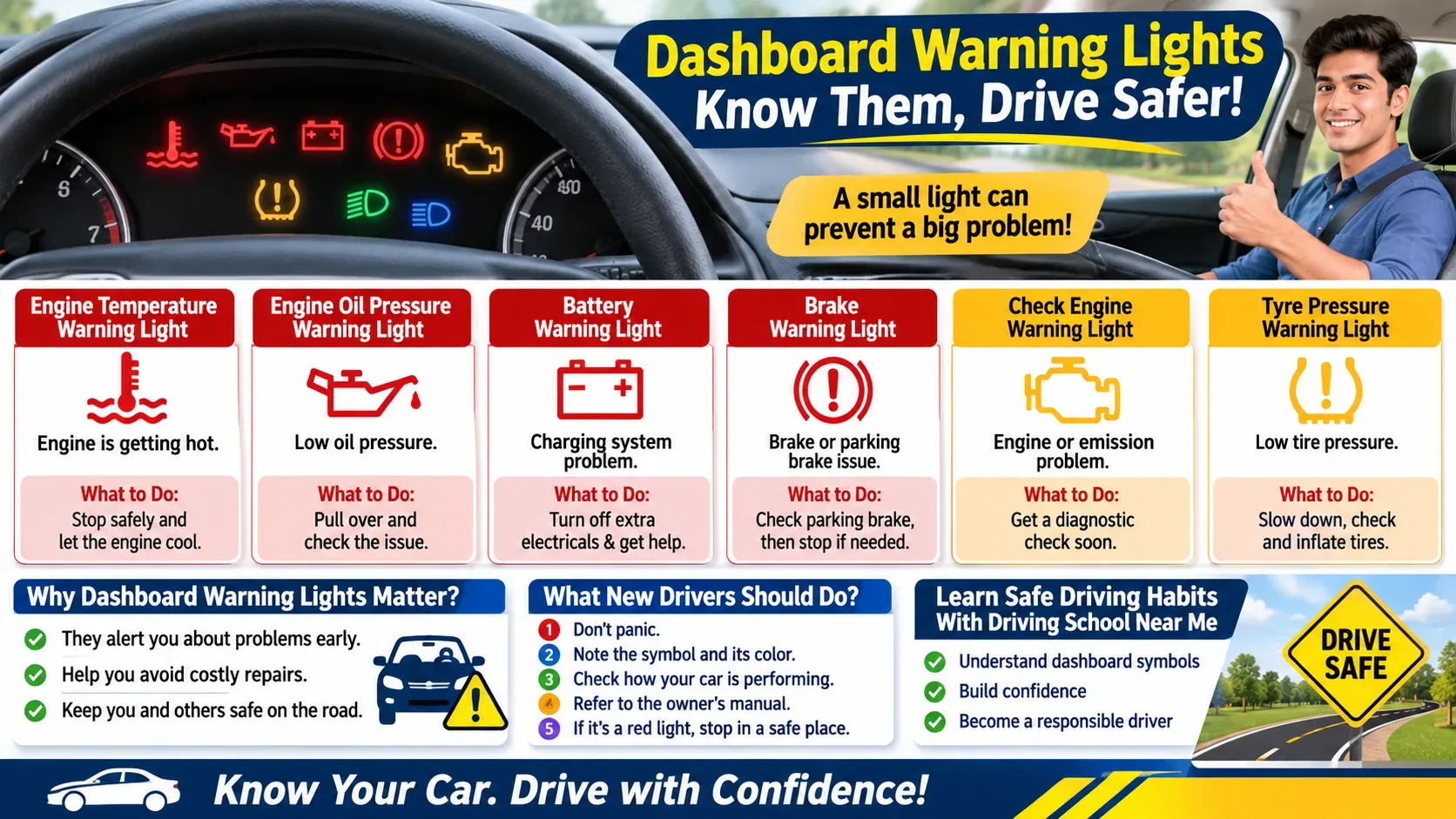
Learning to operate a motor vehicle is about more than just steering, shifting gears, and obeying the laws of the road. It requires the new driver to be knowledgeable of the various warning lights that are displayed on the vehicle’s instrument panel. The purpose of these symbols is to alert the driver of possible problems that may exist in areas such as the engine, brakes, battery, tires, and many other significant components. Failure to pay attention to a warning light could result in a small problem becoming a large expense, or pose a safety hazard.
As a new driver learning through a driving school, understanding the dashboard warning light symbols is an integral part of becoming a safer driver. When you understand what each symbol represents, it will allow you to stay calm and make the right decision while driving on Indian roads.
Why Dashboard Warning Lights Matter
Modern cars use their dashboard warning lights to inform drivers that a system is in need of maintenance. Some lights will illuminate for a short period of time after the car has been started to indicate that the systems have undergone a routine check. If a failure is found within the vehicle’s systems, or if a safety feature needs to be addressed, other lights will remain on.
Dash board warnings are usually of different colors for different levels of urgency . A red light usually means that you have a serious problem that needs immediate attention ( such as pulling your car over to a safe location ). An amber/yellow light usually represents an issue or condition requiring attention in the near future. Finally, green and blue lights usually represent when an application (i.e. headlights) is currently being used.
Always refer to the owner’s manual of your vehicle as there may be differences in the meaning of warning lights on different models.
Engine Temperature Warning Light
An engine temperature warning light will look like a thermometer with wavy lines. This means that the engine is getting too hot and if you keep going on your trip, there could be some major problems with your car.
As soon as possible, find a place where you can safely stop and turn off the engine when you see this warning light. Once the engine cools down, you can then take other steps. Do not attempt to remove the radiator cap while the engine is still warm, as there will be pressure in the system which can cause serious burns from the hot coolant. If the warning continues to display, or if you notice that there is coolant leaking, please contact a qualified technician for help with your car, instead of continuing on your way.
Engine Oil Pressure Warning Light
The engine oil pressure warning light often looks like a small can of oil. It means that there is a possibility that the engine is not getting enough oil pressure to provide adequate lubrication.
Never ignore this warning. As soon as you can, pull over to a safe area and turn off your car. If you keep driving, it is likely that you may cause severe engine damage. Read the owner’s manual and seek professional assistance if the warning light does not go out. You should not believe that just putting more oil into your vehicle will fix the issue.
Battery Warning Light
A battery-shaped warning lamp can suggest there is a problem with the vehicle’s charging system. Possible reasons for this warning can include an alternator malfunction, a broken belt, or a battery related electrical issue.
If the battery warning light remains illuminated with the engine running, turn off all electrical equipment not required for operation and locate a safe place to stop. Get help as soon as possible, since your car could lose its electrical system function or become inoperable.
Brake Warning Light
The presence of a red brake warning light can signify that the parking brake is applied, there is insufficient brake fluid, or that something is wrong with the vehicle’s brake system.
First, make sure the parking brake is fully released. If the warning light continues to illuminate, safely come to a halt and follow the troubleshooting instructions in your owner’s manual. If you feel that your brake pedal is “soft,” it is hard to slow down or stop the car, or you see any fluids leaking from under your vehicle, then do not continue driving. Contact a professional mechanic to have your vehicle examined.
Check Engine Warning Light
The Check Engine Light is typically represented by a small icon resembling an engine. When it lights up, it could mean there’s an issue with the vehicle’s engine, its emission system or other parts.
If the light remains illuminated and your car is running well, please have a diagnostic test performed as soon as possible. However, if the light blinks, you experience shaking, loss of engine power, or other abnormal behavior with your car, then please stop safely to minimize risks and seek professional help. Do not disregard a warning that continues to appear just because your car is still operating.
Tyre Pressure Warning Light
In some cars, there is a tire pressure monitor that will let the driver know if any of their tires are low on air.
If you see the warning, slow down carefully and find a safe place to examine your tires. Look for signs of damage or you have a flat tire.” Once you are able to do so safely, check the pressure of your tires. Fill each tire with air until it reaches the recommended pressure indicated on the label on the door frame or in the owner’s manual of your car. If you notice an immediate drop in tire pressure or have damaged a tire, take care of it as soon as possible.
What New Drivers Should Do When a Warning Light Appears
Don’t panic and try to avoid making any rapid moves with your brakes or steering wheel. Take note of the symbol and its color, see how your car is performing and refer to the owner’s manual. A red warning sign signifies a significant problem so you should find a safe place to pull over and shut down the engine as soon as possible. Do not examine a vehicle while it is in operation in a active traffic lane.
The learning process that takes place during driving instruction will provide the novice driver with the confidence needed to know if their car is safe for operation.
Learn Safe Driving Habits With Driving School Near Me
A fundamental aspect of being a responsible driver is knowing how to read dashboard warning lights. In addition to road signs, steering control, parking, and other aspects of driving awareness such as understanding the flow of traffic, having basic knowledge about your car will help you develop confidence and preparation for each trip you take.
New drivers can be taught how to identify potential hazards, react appropriately and when to seek assistance from an auto repair professional with good driver education and ongoing practice.