
Introduction
Driving is not just about learning how to operate a vehicle or passing the driving test. Real-world driving skills and competence are realized through situational awareness, understanding of subtle forms of judgment, and revealing correct decision-making across the multitude of day to day decisions one must make on the road. Defensive Driving It is a life skill that “teaches you to predict before the risk itself becomes an accident”. Defensive driving in Delhi however, quickly becomes a matter of what is taught to new drivers and less of a topic in the short term.
New drivers often think that it’s simply following the traffic rules that makes them safe on the roads. What a savvy driver learns is that being safe on the road also relies heavily on observing, having the patience to wait for a good turn, timing your reaction correctly and adjusting quickly when unpredictability comes. Which is why defensive driving training still has value long after someone earns a license.
Why You Should Keep Learning Defensive Driving Skills
Defensive driving is Improperly assumed as a temporary process thought in the practical classes. Put simply, this is a gradual driving ability honed with experience. Road conditions, traffic density and behavior of drivers is in continuous flux. Cautious and proactive drivers are generally better fitted to evade accidents and stressful situations.
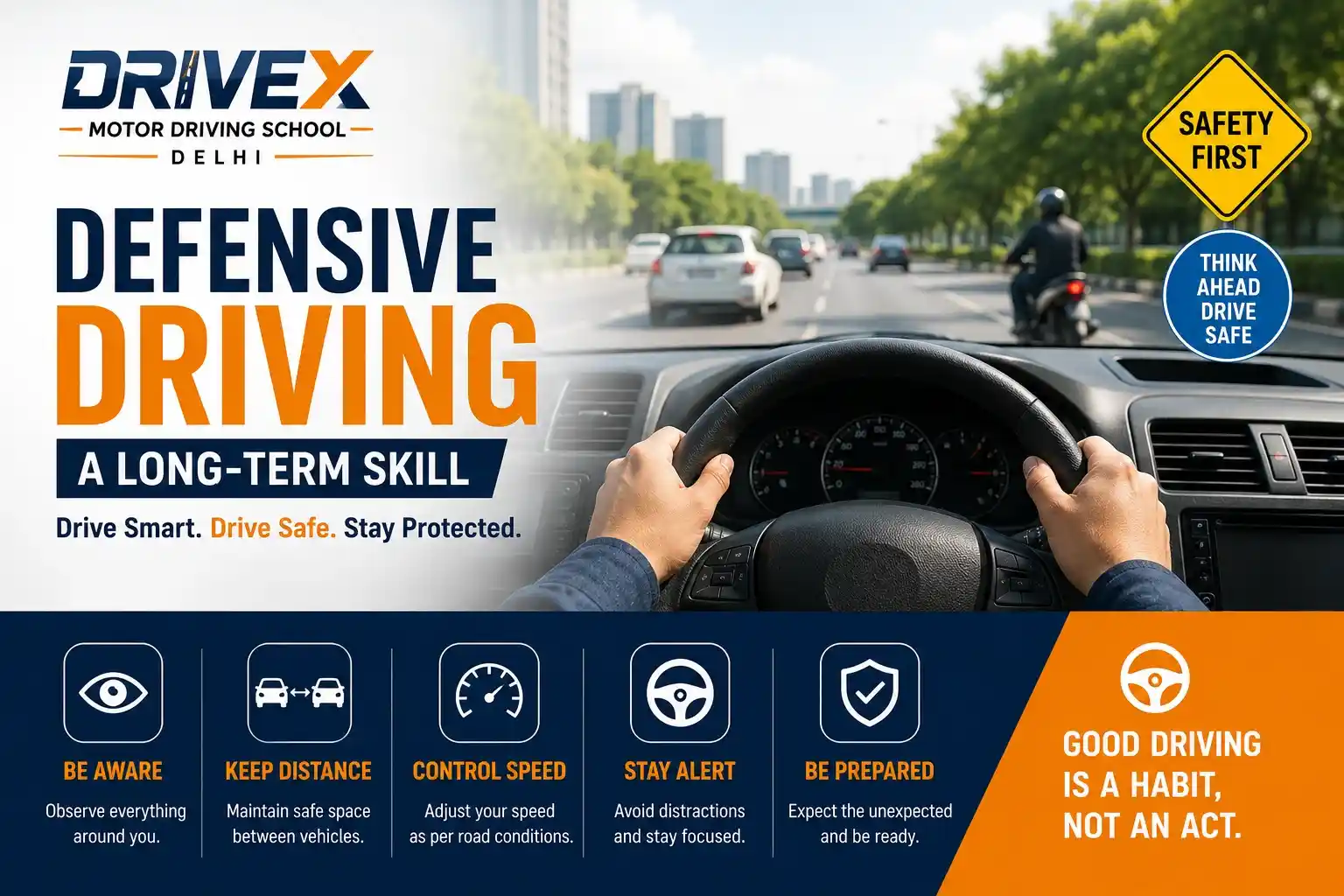
Experienced instructors often see that first time drivers are always thinking about why he/she has to control the vehicle further up the road but lose sight of their surroundings. Part of defensive driving is learning to watch your blind spots, keep other cars at a safe distance from you and potentially anticipate sudden braking as well as identifying aggressive and unsafe driving behavior from other motorists. Such habits decrease the risk of a crash and boost your confidence when driving.
Over the long haul, safe driving strategies help alleviate mental fatigue. Constantly reacting at the last second as a driver builds up more stress. Because defensive drivers anticipate more problems sooner, they drive more calmly.
Defensive Driving Training: where habits get built safely
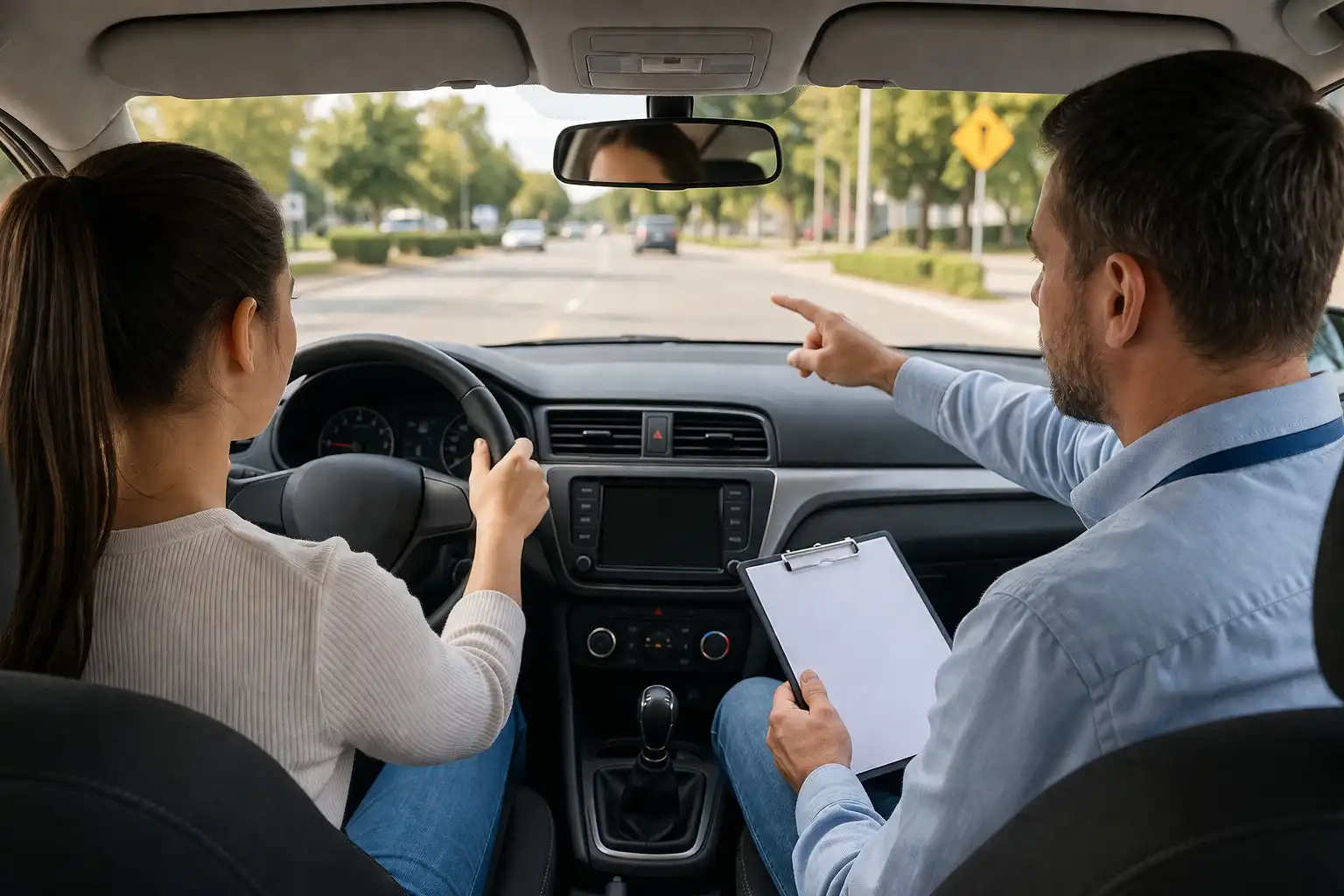
Defensive driving training through defensive driving courses help beginners with disciplined driven behavior from the very beginning. Rather than only instinct, drivers are educated to make decisions in a careful approach, which can aid their street judgment.
An effective defensive driving course educates drivers about scanning traffic, modifying speed on the road, and staying alert in busy surroundings. Such classes come in handy more so for an urban setting like e.g.: Delhi, where traffic patterns are far from predictable and distractions are everywhere & always around.
Drivex motor driving school emphasizes safety techniques in hands-on practical as opposed to just memorizing them. This method reinforces sensible driving practices that serve students long after the formal training is finished.
Timeless Safe Operating Strategies
Reading Traffic Conditions Early
This is one of the most important defensive driving skills, knowing how to read driver behavior prior to minor incidents. Good drivers look several cars ahead instead of focusing only on the one directly in front. This wider perception gives you additional reaction time in the event of a sudden lane change or hard braking situation.
Maintaining Space and Control
A good number of Accidents take place as drivers tailgate vehicles. Particularly for newbies, defensive driving consists of: How efficiently do make distance as well as handle in order to never always need to steer about or adjoining an automobiles being operated normally (in your lane). It is especially critical during rain, heavy traffic or at night.
Avoiding Overconfidence
With experience, caution can be slowly replaced with overconfidence. Even after decades of driving, road safety hinges on consistently raising awareness of the same. Drivers with long records of defensive driving habits tend to be safer than skilled but careless drivers.
Defensive Driving in Delhi Traffic
Driving in Delhi on the other hand is an exercise in alertness (almost as much as NYC). Defensive thinking will also be in demand through congested roads, escorts with unpredictable movements, sudden lane shifts and different driving styles.
One area where new drivers are often challenged is deciding what to do at busy intersections and in areas of high traffic. Driving lessons taught by professionals that emphasize road awareness may lessen hesitation and quicken reaction timing. Defensive driving training also prepares the drivers to remain calm under pressure, instead of making rash choices.
At drivex motor driving school, we often see beginner drivers who are initially nervous when handling busy road systems. This approach of baby steps and scaffolding builds safe confidence.
Common Mistakes New Drivers Make
Most basic driving advice just covers steering and parking, but the bigger challenge is usually not technical skill at all, but poor judgment. New drivers often misjudge how long it should take to cross over from braking, respond aggressively to others calling on them for room, or lose concentration due to phones and SatNavs.
Another mistake is taking other drivers for granted that they will behave the way you expect. Defensive driving, however, teaches that road users can do something unexpected or unsafe at any time. Being prepared for what others might do is integral to the practice of safe driving.
Similarly, fatigue and emotional driving can also result in poor road decisions. Stressed, angry or that are tired have more chances of missed hazards or risky behaviors.
Useful Driving Principles You Can Use in the Long-Term
Also learn that defensive driving is not a temporary skill; it should be practiced all the time. People who take the time to observe their surroundings, remain calm in traffic and do not drive flamboyantly are destined to become better drivers over time. These habits are enhancing not only safety but overall driving efficiency.
Learning to drive for the long haul relates back to both. By consistently honing their skills of observation and reaction, seasoned drivers tend to encounter fewer accidents and have a lower stress experience over time.
Conclusion
Defensive driving is a skill set, not a quick course you take just enough to get your pass your driving test. They are permanent behaviours which influence how drivers react to realistic road situations for the rest of their driving life. Defensive driving helps to works by keeping drivers aware, keeps distance and prepare for a danger and opposing reactions.
While these techniques taking time to learn, you can make a world of difference in long-term road safety by making sure that new drivers in your family learn about them early on. Professional training settings like drivex motor driving school can help beginners create practical driving routines that stick long after the learner stage has passed.