
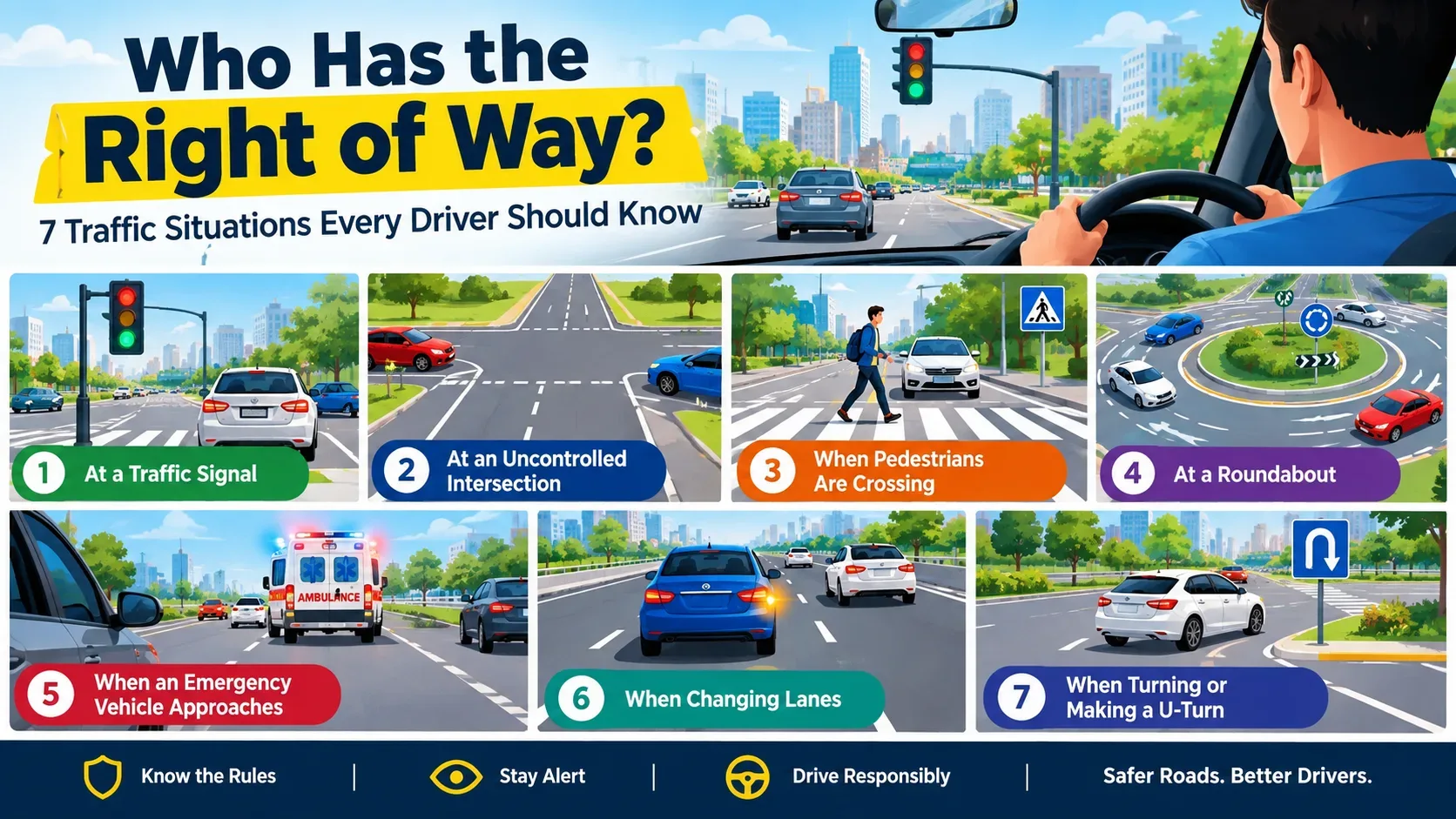
Who has the right of way is one of those essential pieces to safe driving. Now drivers get the scenario on busy roads where now two or more vehicles want to move at a same time. Insights on right-of-way regulations, traffic signals and road signs on the roads to avoid confusion into lane discipline & pedestrian priority help reduce accidents.
These scenarios can seem challenging, especially for inexperienced drivers learning to drive in Delhi traffic. We have compiled seven common traffic situations every driver should know how to handle.
At a Traffic Signal
Traffic lights are perhaps the most obvious form of right-of-way control. For example, a green signal will allow you to move ahead if the path appears clear but red signals stop. A yellow signal alerts and prepares drivers for the change in signals.
But the echo of green light does not suggest to drive without looking around. Be sure to look out for pedestrians, vehicles that may be completing their crossing of the junction and traffic already clearing it before entering any intersection.
Obeying traffic signal rules and awareness in driving is always must.
At an Uncontrolled Intersection
A junction with neither traffic signals nor signs or a policeman can be very confusing for beginners. We slow right down, look at other road users and only drive once we know it is safe to do so.
Asking other drivers to yield is not a good practice. According to the official driving rules, right of way refers to when one road user is an entitled party that can go ahead in preference over another if it leads or could lead to danger and/or collision.
Take an extra second, being in conflict with a vehicle is much worse than stepping aside.
When Pedestrians Are Crossing
Drivers should remain cautious around pedestrian crossings, schools and public markets as well the traffic hotspots. If there are pedestrians on your path and the chance of crossing or going to cross it, slow down a lot from them.
This applies both ways : new drivers should never assume that a pedestrian has spotted their car. If you are traveling at a manageable speed, and ready to stop, it gives you longer timeto respond.
This is an essential element in terms of defensive driving and road safety.
At a Roundabout
Roundabout helps when you are learning car driving in Delhi, but it can be baffling. Slow down when approaching a roundabout and look for traffic already in or traversing the circle.
Obey the signs, road markings and signals at that roundabout. If you think you have the right of way, do not enter Always ensure that there is space to enter without any traffic question.
Safe driving in roundabouts involves looking, lane positioning, maintaining a safe speed and signalling.
When an Emergency Vehicle Approaches
If an emergency vehicle approaches with its sirens and lights, drivers should remain calm and clear a path safely.
Do not cut into the other lane with No heads up! Watch for any other traffic, and carve out space when you can to make sure that the emergency vehicle does not get blocked off.
Understanding how to react when you are driving in traffic and an emergency vehicle is near should be a crucial aspect of becoming a responsible driver.
When Changing Lanes
That does not mean you get priority when changing lanes. Check your mirrors/make sure the blind spot is clear/indicate right and there is enough space in front of you to change lanes.
A big mistake by many new drivers, is to change lanes just because the indicator has been switched on. An indicator does not mean your lane is free; it signals your intention.
Contrary to many other driving skills, lane changing rules have nothing more than a factual basis —no multigenre but the proper mirror checks for blind spots mean you can safely change lanes at any time.
When to Turn and When Not to Make U-Turn
Drivers should check the traffic, road signs and lane markings when preparing to turn or make a U-turn. Do not expect another vehicle to stop simply because you are making a turn.
Brake before the manoeuvre, use correct indicator and ensure movement can be completed safely. Obey restrictions on U-turns if there is a sign, road marking or other traffic control indicating that such turns are not allowed.
The purpose of learning turning rules and U-turns in India helps the beginner to know what right or wrong they are doing while having a heavy traffic area.
Understanding Importance of Right-of-Way Rules for New Drivers
The right of way is not just about which driver gets to go first. It means being able to travel on the highway safely and predictably. Traffic signals, signs and road markings need to be seen as does the guidance of traffic police combined with visually positioning ourselves according to other passing vehicles.
Driving lessons for beginners will allow students to get important practice in real driving situations under the supervision of an instructor, such as intersections, lane changes(turns), parking and traffic lights. Such skills could facilitate understanding of road rules in India and build better on-road awareness.
The most responsible driver is not the one who must go first. The appearance of caution from a driver that is vigilant, familiar with the traffic scenario and following laws as well priority to avoid peril. If every novice were taught right-of-way rules and defensive driving techniques, everyone would be a better driver.