
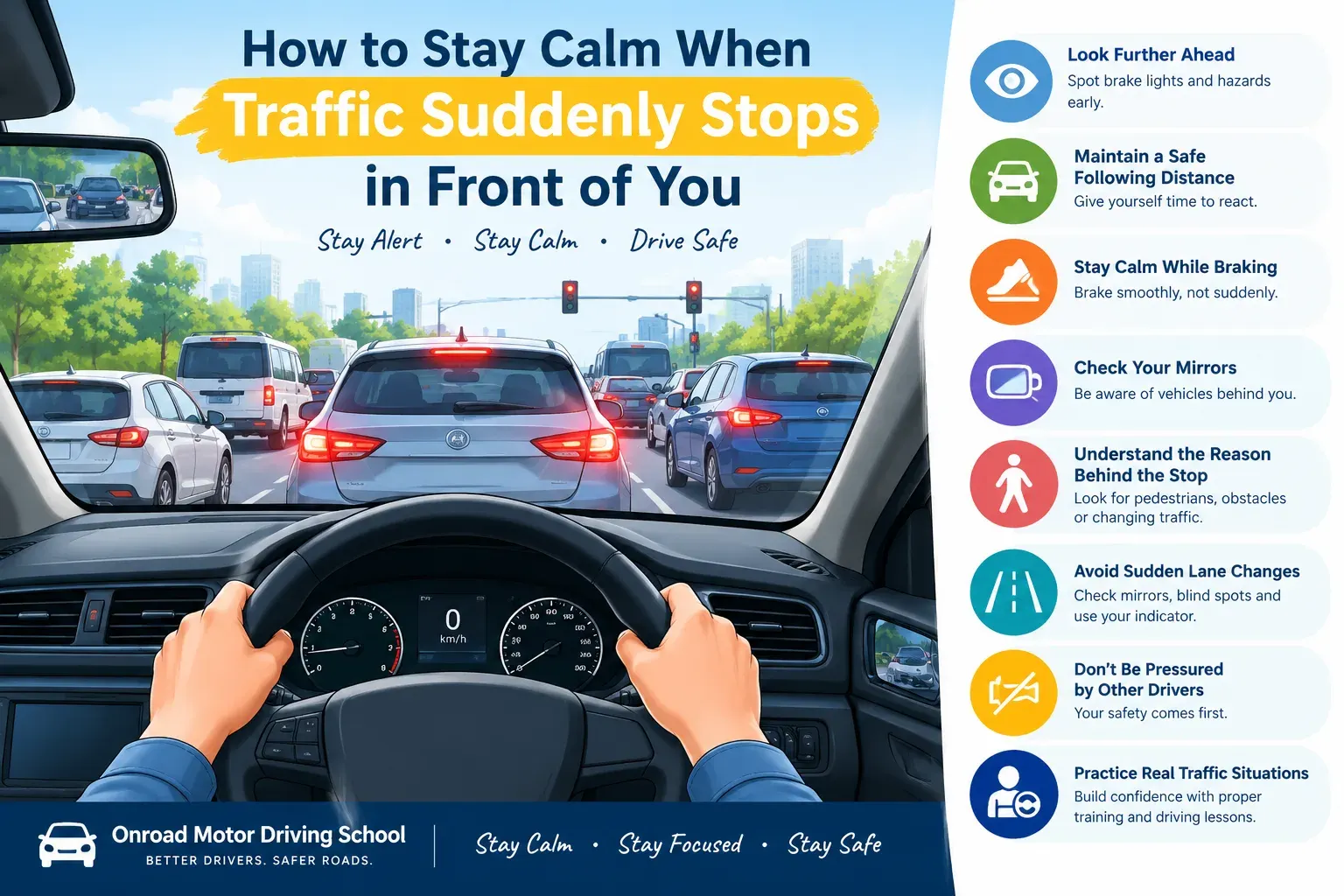
In busy traffic driving can be stressful, and often the cars ahead suddenly stop. You could be driving normally one minute, and the next thing you know is a number of cars are right there hit both brake lights. This can induce panic and sudden braking, not changing lanes or switching in many cases for new drivers. As a new driver, knowing how to keep your cool when traffic suddenly stops in front of you is an important skill.
Since there are various reasons a driver might stop suddenly on the road. A traffic light perhaps, a pedestrian crossing the road suddenly; or due to high order vehicle braking without any prior notice or accumulation of heavy traffic. A good command of the response can identify control and avoid dangerous situations.
Look Further Ahead
If you want to avoida rear end collision — or be prepared for sudden traffic stops, one of the best things you can do is look past the car right in front. Most newbie drivers only look as far ahead as the car in front of them, but good road awareness means you should constantly be looking down the road.
By peering several vehicles into the future, you can spot brake lights, tapering traffic ahead and even pedestrians or obstacles becoming a problem before they are an issue. This allows for a longer time to decelerate, rather than halt.
Having this habit in the car at driving lessons can help you be more alert when driving on busy roads.
Maintain a Safe Following Distance
Tailgating is a leading cause of why many drivers have trouble when traffic comes to an abrupt halt. The smaller your gap between vehicle ahead, the shorter you have to react.
A safe following distance gives you more space to stop or slow down without crashing. Also, helps avoid rear collisions.
How far away you need to be depends on your speed and the road conditions. Leave extra room when driving in rain, poor visibility or heavy traffic.
Knowing how to maintain a safe following distance is crucial in defensive driving and novice training.
Stay Calm While Braking
Your first instinct may be to panic as traffic comes abruptly to a halt. You could slam the brake too hard or steer suddenly. You should try to (re)act as quickly as possible, yet you are better off staying calm and more in control of your car.
Focus your eyes at the road and brake firm but smoothly when you have to. Irrespective of doing safely without any undue steering with a computational uncertainty up to October 2023 except on real danger case.
Once you get comfortable with normal driving situations, more practice can help prepare you for those unexpected traffic jams and avoid panicking.
Check Your Mirrors
You should train your eyes on the road, but everyone must be mindful of how vehicles behave from behind when you see traffic stall ahead.
A simple glance in your mirror can reduce the chances of rear-end contact with another vehicle. This would be beneficial when you require slowing down fast.
But mirror checks must be just that — short. Always pay attention to the road ahead! A large part of any formal driving instruction involved teaching how to check your mirrors properly.
The reason why it has … → Aim Reason Behind the Stop
There could be something in front of the vehicle that you cannot see instantly when a vehicle suddenly stops. One could be a pedestrian, motorcycle, road hazard (like what the NFL would call “a brick”), sequestration of multiple cars changing direction.
Do not just follow the car in front of you, try to understand why traffic has stopped. Since this allows you to recognize concealed road dangers before they result in any threats.
Such as slow down and pay attention when a vehicle in front of you stops near where someone is crossing the street. You may be unaware of a pedestrian or another road user obscured from your view at the start.
Avoid Sudden Lane Changes
And some drivers get anxious when traffic slows down and try to change lanes immediately. That may be dangerous as the other lane might also be slowing down or a vehicle could exist in your blind spot.
You must not change lanes because you are pressured. Check your mirrors and blind spot, use indicator- move only when you have space (i.e. signalling is allowed first).
And that brings us back to the idea of safely changing lanes—without patience, observation and proper vehicle control.
Don’t Be Pressured by Other Drivers
This is even worse(than traffic. Someone right at your behind using horn and wanting to overtake you.
Don’t let the actions of a driver be how you choose to drive. It is your job to drive safely, not an impatient drivers.
If traffic is halted then, you need to halt lastly hold control of the bicycle too. Do not drive faster because the person behind is losing patience.
Being confident behind the wheel means consistently making safe choices no matter how much neighbouring road users are pressuring you.
Practice Real Traffic Situations
The correct way to deal with urgent traffic halts is by means of gaining knowledge. Driving instructors teach you to maintain following distance, identify hazards and control your speed to accommodate changing traffic conditions safely.
Frequent driving lessons help beginners adjust to heavy traffic, busy intersections, changing lanes and sudden braking in unfamiliar roads.
Continuous lessons and practice, especially if supervised around heavy traffic scenarios will also help you build confidence as well as becoming more aware of the road.
Final Thoughts
And this is part of safe driving — knowing how to remain calm when traffic suddenly brakes hard in front of you. On busy roads, come to an abrupt stop now and again is something almost all of us do at some point yet does not need be a cause for alarm.
People are metering how far ahead they look, maintaining a buffer from the vehicle in front of them, staying calm while braking, lifting and looking at their mirrors every few seconds for debris or hidden dangers you can’t see otherwise. Adopting these simple habits can help you get better at defensive driving and handle unpredictable traffic situations more confidently.
With the right car driving lessons, expert advice from qualified instructors and lots of practise new drivers can be reassured that over time they will learn to stay calm in difficult situations rather than panicking in judgement calls behind a wheel. Safe driving is not about getting the foot down as quick as you can. It is about detecting hazards in advance, maintaining sufficient distance space and reacting in a timely way.